Author
Edwin Keshish-Abnous
In March 2026, the world woke up to a very different reality. One of the most critical energy routes on the planet had almost come to a standstill. The Strait of Hormuz, the narrow passage between Iran and Oman, normally carries around 21% of the world’s daily oil supply. But because of the ongoing conflict involving Iran, it has become the center of what may be the largest oil supply disruption in modern history.[1],[2]
The International Energy Agency’s March 2026 oil market report put it in stark terms: traffic through the Strait of Hormuz dropped from roughly 20 million barrels a day before the war to almost nothing. Tankers are stranded, refineries are shutting down, and major Gulf producers have been forced to scale back because storage is full and export routes are blocked. This is no longer just a regional problem. The effects are rippling across the world, hitting energy security, shipping insurance, food production, and even the price of everyday technology like smartphones.
Why Hormuz is More Important Than Any Other Chokepoint.
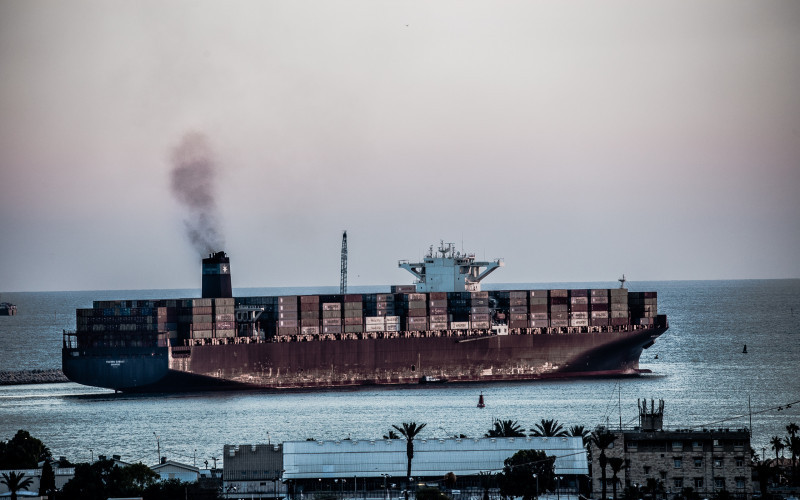
To understand how serious this is, think of the oceans as the world’s highway system. Even now, more than 80% of global trade moves by sea. There are container ships and bulk carriers everywhere, but oil is still what keeps the whole system running. On any given day, hundreds of thousands of ships are out on the water, including thousands of supertankers. These massive vessels are the lifelines of the modern economy.
And in that system, the Strait of Hormuz is the tightest and most important bottleneck. At its widest point, it stretches about 10 kilometers, but the actual shipping lane used by giant tankers is only around 2.5 kilometers wide. The United Nations mapped that route decades ago. Every barrel of crude, every shipment of liquefied natural gas, and huge volumes of petrochemicals and fertilizer coming out of the Gulf have to pass through that narrow corridor.[3]
The Persian Gulf is bordered by eight countries: Iran, Iraq, Kuwait, Saudi Arabia, Bahrain, Qatar, the UAE, and Oman. Of those, Iraq, Kuwait, Bahrain, and Qatar depend entirely on the Gulf to reach the open sea. Beneath and around these coastlines sits an enormous share of the world’s oil and gas reserves, including the massive South Pars/North Dome field shared by Iran and Qatar. Venezuela may rank higher on paper in total oil reserves, but when it comes to energy that can move quickly into the global system, the Gulf remains one of the world’s most critical regions.
Unlike places like the Suez Canal, which ships can avoid by going around Africa, or the Strait of Gibraltar, Hormuz does not really have a workable backup route. Saudi Arabia and the UAE have built pipelines to bypass part of the problem, sending oil toward the Red Sea or the Gulf of Oman, but those options are limited, expensive, and nowhere near enough to replace the strait. So if Hormuz closes, it is not just an inconvenience. It becomes a serious economic blow.
The Current Disruption
That is exactly what this war has done. Qatar, one of the world’s leading LNG exporters, has been forced to halt production because tankers can no longer move through the strait. In Saudi Arabia, refineries have also been hit, with operations grinding to a stop.[4] Europe’s gas market, already under pressure after losing much of its Russian supply, is tightening even faster. In Asia, the sense of urgency is even greater. Roughly half of China’s oil passes through Hormuz, while Japan and South Korea rely on the strait for most of theirs. India and Bangladesh are also heavily exposed. When traffic through Hormuz is disrupted, the effects are felt far beyond the Gulf.[5]
The impact goes well beyond higher gas prices. Hormuz is the main route through which Qatar and Iran send out natural gas, and that matters far beyond the energy sector. Fertilizer production is already being affected, and at a time when planting season is underway across much of the Northern Hemisphere, farmers are facing shortages and rising costs. Petrochemicals used to make plastics, paint, and packaging are also being held up. Even industries far removed from the Gulf could feel the strain. If LNG supplies remain disrupted, major manufacturing centers, including chip production in Taiwan, could face serious pressure, with knock-on effects for phones, laptops, cars, and countless other products people rely on every day.
The Gulf states themselves are also feeling the pain. For many of the countries along the southern side of the Gulf, the strait is not just an export route. It is also a lifeline for basic imports, including food. As that passage remains disrupted, shortages are already beginning to appear across the region.
The Global Response and the Question of Leverage
Governments are responding with unusual speed. On March 11, 2026, the IEA approved the release of 400 million barrels from emergency reserves, the largest coordinated drawdown in its history, with the United States supplying most of it. Washington has also floated the idea of political-risk insurance for tankers and signaled that the U.S. Navy could escort ships if needed. At the same time, it has been pressing allies to help secure key shipping routes.
These moves point to something larger. When commercial shipping can no longer function without naval escorts and government-backed insurance, power starts to shift toward the countries that can provide both. The crisis has squeezed Iran, exposed China and India to new energy risks, added more strain to LNG-dependent European economies, and left the Gulf Arab states with fewer options than they appear to have on paper. People will keep debating whether this was part of a broader strategy or simply the result of geography colliding with war. Either way, the conflict has exposed just how fragile the global energy system really is.
A Reminder from History
The name “Hormuz” itself carries a long history. Its roots are often linked to the Zoroastrian tradition and to the ancient Persian world, a reminder that this narrow passage has mattered for far longer than the modern oil age. For centuries, it has held strategic value. Today, it remains one of the clearest measures of who controls access, supply, and security in an energy-hungry world.
And that is really the lesson here. In a world this connected, a channel only 2.5 kilometers wide can disrupt industries, drive up food prices, and shift the balance of power almost overnight. As long as the global economy still depends heavily on oil and gas, the Strait of Hormuz will remain the world’s most important, and most dangerous, chokepoint.
In the coming weeks, we will see whether diplomacy, naval escorts, or simply the pressure of economic losses can force the strait back open. Until then, every barrel of oil that fails to pass through Hormuz is a reminder that geography still shapes power, even in the narrowest places.
And as the global economy absorbs one shock after another from the near-total closure of the Strait of Hormuz, a more unsettling question begins to emerge. The public justification for the war remains centered on Iran’s nuclear ambitions and its regional behavior. But the broader consequences suggest something bigger may be at work. China’s energy supplies have been hit hard. Europe is staring at yet another energy crisis. And the United States has positioned itself at the center of the response by offering naval protection, releasing massive reserves, and backing commercial shipping with political-risk coverage.
That has led some to ask whether this war is really about regime change in Iran, or whether its deeper effect, and perhaps its deeper purpose, is to reshape the global energy map, strengthen America’s strategic hand, and weaken both China and parts of Europe in the process.
______________________________________________
[1] International Energy Agency (IEA), “Strait of Hormuz,” Oil Security and Emergency Response, https://www.iea.org/about/oil-security-and-emergency-response/strait-of-hormuz; and International Energy Agency (IEA), Oil Market Report – March 2026, March 2026, https://www.iea.org/reports/oil-market-report-march-2026.
[2] U.S. Energy Information Administration (EIA), “Amid regional conflict, the Strait of Hormuz remains critical oil chokepoint,” Today in Energy, June 16, 2025, https://www.eia.gov/todayinenergy/detail.php?id=65504.
[3] Strauss Center for International Security and Law, “Strait of Hormuz – About the Strait,” accessed March 19, 2026, https://www.strausscenter.org/strait-of-hormuz-about-the-strait/.
[4] Yousef Saba and Maha El Dahan, “Qatar LNG, Saudi Refinery, Israeli Oil, Gas Fields Down Due to Mideast Strikes,” Reuters, March 2, 2026, https://www.reuters.com/business/energy/saudi-aramco-shuts-ras-tanura-refinery-after-drone-strike-source-says-2026-03-02/.
[5] Niccolo Conte, “Charted: Global Energy Flows at Risk in the Strait of Hormuz,” Visual Capitalist, March 5, 2026, https://www.visualcapitalist.com/chart-energy-flows-at-risk-strait-of-hormuz/.
Share
STAY IN THE LOOP