A Media Lens on Iran’s Church Growth
For the last twenty years, I’ve had the honor of being very involved in Iranian Christian broadcasting through Mohabbat TV. I recently read an academic article by Duane Alexander Miller called “Power, Personalities, and Politics: The Growth of Iranian Christianity since 1979” (published in Mission Studies, 2015), and I was struck by how closely his analysis matches what many of us in media ministry have seen in person. Miller argues that since 1979, Iranian Christianity has transitioned from a predominantly ethnic-minority phenomenon to a growing, indigenous, Farsi-speaking movement, influenced by political and economic upheavals, courageous leadership, and, especially, a revolution in communication and technology.
Miller’s framing is in line with what many of us in ministry have seen. Christianity has been around in Iran for a long time. By the 20th century, most Christians in the country were Armenian and Assyrian, while most ethnic Persians were Shi’a Muslim.
One of the most honest things about Miller’s research is that he is careful with numbers. It’s never easy to count converts in a small space. There are different definitions, security issues are real, and a lot of the movement happens in private places that are hard to measure on purpose. Still, Miller points out a trend that can’t be ignored: estimates of the number of Muslim-background believers rose from about 500 in 1979 to much higher numbers in the years that followed.
He also talks about how important it is to have brave leaders like Bishop Haik Hovsepian, who helped break down barriers by expanding the Farsi ministry and focusing on ministry in homes instead of just church buildings.
The expensive deaths of leaders like Hovsepian and Mehdi Dibaj did not stop the movement; instead, they made the Church stronger and more visible, as history has shown time and time again.
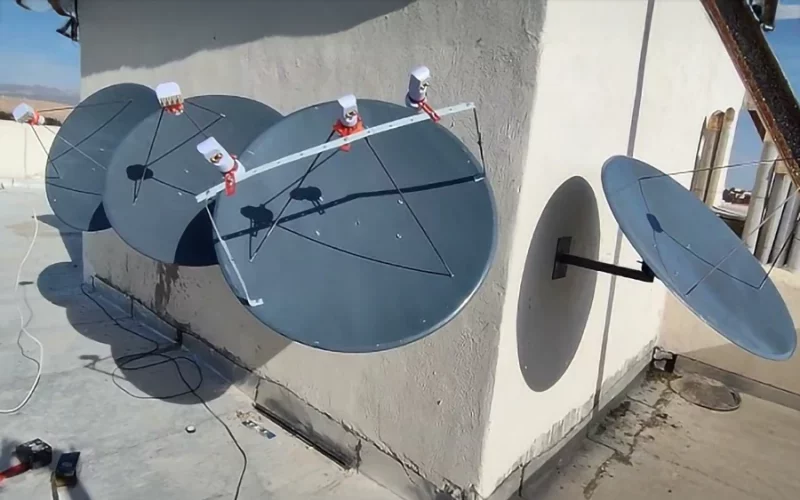
As someone who has spent years building, learning, and praying in the world of broadcasting, Miller’s analysis of media and communication really stands out to me. He says that the Christian message is more widely available than ever before. He also says that satellite broadcasting in Farsi and online platforms have been very hard for the Iranian government to completely censor.
This observation is not theoretical for me. It talks about the ecosystem we’ve been living in.
When Mohabbat TV started and grew, we weren’t just filling up time on the air. We were creating access. We were giving people a way to find faith without risk, even if they didn’t have a safe local Christian contact, a church building to go into, or a public path to explore. In many cases, a satellite signal or a digital video was the first time someone heard the gospel in Farsi. This led to a phone call, a discipleship journey, a house church connection, and a deeper faith.
Miller also talks about a bigger social and political reality: when a government mixes religious legitimacy with political power, bad government can make people lose faith in religion.
In this situation, some people leave Islam for secularism, while others become open to Christianity, especially when the message is available in their language, connected to their culture, and offered through channels that the government doesn’t control.
From my point of view, this is exactly where Christian media can be both useful and strategic in the best way. It helps the Church grow not by taking the place of local communities, but by serving them, by making room for interest, offering reliable teaching, and helping isolated believers find their next steps.
Miller’s conclusion confirms what many of us have long thought: technology, language access, and the spread of the gospel through modern communication are not just footnotes in Iran’s story; they are part of the infrastructure God has used to keep His Church alive and growing under pressure.
I believe that Heart for Iran is uniquely positioned, by the grace of God, to keep reaching out to Iranian people in this country where it is hard to do so. We are not just watching this story. We have decades of experience, trusted platforms, and a strong desire to help both seekers and the growing house church movement. We are not doing this alone; we have worked with faithful partners who have given us content, resources, prayer, and strategic advice. By God’s grace, we are all part of how hope keeps getting into homes in Iran.
Edwin Keshish-Abnous
Executive Director
Heart4Iran
Duane Alexander Miller, “Power, Personalities and Politics: The Growth of Iranian Christianity since 1979,” Mission Studies 32, no. 1 (2015): 66–86,
Share
STAY IN THE LOOP